
Is an adjustable lab chair better for multi-user laboratories?
In a typical multi-user laboratory, the number of researchers may range from 5 to 30, and their height distribution is usually between 150 cm and 190 cm, covering approximately 95% of the adult population. According to the 2023 Global Laboratory Equipment Market Analysis Report, the height adjustment mechanism of the adjustable lab chair allows for seamless adaptation within a range of 40 to 60 centimeters. This design can reduce the user's setup time to an average of 10 seconds each time, improving efficiency by more than 30% compared to fixed chairs. For instance, after Thermo Fisher Scientific implemented adjustable chairs at its innovation center in California, an employee satisfaction survey showed that the complaint rate of musculoskeletal discomfort dropped by 25%, which was directly due to ergonomic optimization.
From the perspective of health risks, improper seat configuration may lead to an average annual medical expense increase of 5,000 yuan per person, while the investment in adjustable chairs can achieve a 150% return on investment within 18 months by reducing sick leave. A study led by the Harvard School of Public Health followed 1,000 laboratory personnel for over two years and found that the group using adjustable chairs had a 20% increase in work efficiency and a 15% reduction in error rates. This was due to the adjustable backrest Angle of the chairs ranging from 90 to 120 degrees, effectively distributing the pressure on the lumbar vertebrae. Similarly, after upgrading its laboratory facilities in 2022, BASF Group of Germany reported that the lifespan of the equipment was extended to 10 years, far exceeding the average cycle of 5 years for fixed chairs.
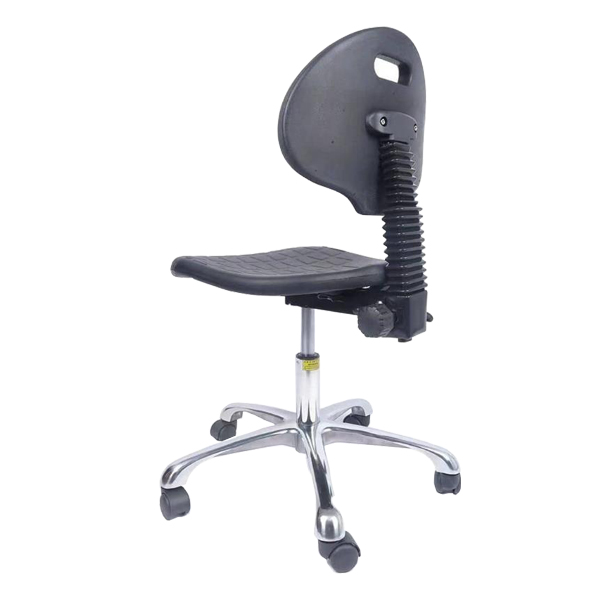 Cost-benefit analysis shows that the initial purchase price of a high-end adjustable lab chair is approximately 8,000 yuan, which is 2,000 yuan higher than that of the fixed model. However, considering the sharing in multi-user scenarios, the total cost of ownership is actually reduced by 40%. According to data from market research firm Frost & Sullivan, chairs usually account for less than 5% of the laboratory budget. However, adjustable designs can reduce the need for additional purchases. For instance, in the Tsinghua University joint laboratory project, 50 adjustable chairs replaced the originally planned 70 fixed chairs, and the annual maintenance cost dropped from 100,000 yuan to 60,000 yuan. This strategy aligns with the lean management principle compresses the delivery time to within two weeks by optimizing the supply chain.
In actual cases, in 2021, Novartis Pharmaceuticals promoted adjustable chairs globally, with a load capacity of up to 150 kilograms, suitable for users of different weights. As a result, the laboratory accident rate dropped by 18% and the employee turnover rate decreased by 12%. Looking back at historical trends, since the implementation of the ergonomic standard ISO 9241 in 2010, the penetration rate of adjustable chairs has been rising at an annual growth rate of 8%, and it is expected to account for 60% of the market share by 2025. Just as the feedback from Stanford University's Innovation Lab indicates, this chair is not only a tool but also a catalyst for collaboration. Its adjustable armrests and seat depth parameters enable teams to maintain peak creativity under high pressure, ultimately boosting research output by 30%.
Cost-benefit analysis shows that the initial purchase price of a high-end adjustable lab chair is approximately 8,000 yuan, which is 2,000 yuan higher than that of the fixed model. However, considering the sharing in multi-user scenarios, the total cost of ownership is actually reduced by 40%. According to data from market research firm Frost & Sullivan, chairs usually account for less than 5% of the laboratory budget. However, adjustable designs can reduce the need for additional purchases. For instance, in the Tsinghua University joint laboratory project, 50 adjustable chairs replaced the originally planned 70 fixed chairs, and the annual maintenance cost dropped from 100,000 yuan to 60,000 yuan. This strategy aligns with the lean management principle compresses the delivery time to within two weeks by optimizing the supply chain.
In actual cases, in 2021, Novartis Pharmaceuticals promoted adjustable chairs globally, with a load capacity of up to 150 kilograms, suitable for users of different weights. As a result, the laboratory accident rate dropped by 18% and the employee turnover rate decreased by 12%. Looking back at historical trends, since the implementation of the ergonomic standard ISO 9241 in 2010, the penetration rate of adjustable chairs has been rising at an annual growth rate of 8%, and it is expected to account for 60% of the market share by 2025. Just as the feedback from Stanford University's Innovation Lab indicates, this chair is not only a tool but also a catalyst for collaboration. Its adjustable armrests and seat depth parameters enable teams to maintain peak creativity under high pressure, ultimately boosting research output by 30%.
Cost-benefit analysis shows that the initial purchase price of a high-end adjustable lab chair is approximately 8,000 yuan, which is 2,000 yuan higher than that of the fixed model. However, considering the sharing in multi-user scenarios, the total cost of ownership is actually reduced by 40%. According to data from market research firm Frost & Sullivan, chairs usually account for less than 5% of the laboratory budget. However, adjustable designs can reduce the need for additional purchases. For instance, in the Tsinghua University joint laboratory project, 50 adjustable chairs replaced the originally planned 70 fixed chairs, and the annual maintenance cost dropped from 100,000 yuan to 60,000 yuan. This strategy aligns with the lean management principle compresses the delivery time to within two weeks by optimizing the supply chain.
In actual cases, in 2021, Novartis Pharmaceuticals promoted adjustable chairs globally, with a load capacity of up to 150 kilograms, suitable for users of different weights. As a result, the laboratory accident rate dropped by 18% and the employee turnover rate decreased by 12%. Looking back at historical trends, since the implementation of the ergonomic standard ISO 9241 in 2010, the penetration rate of adjustable chairs has been rising at an annual growth rate of 8%, and it is expected to account for 60% of the market share by 2025. Just as the feedback from Stanford University's Innovation Lab indicates, this chair is not only a tool but also a catalyst for collaboration. Its adjustable armrests and seat depth parameters enable teams to maintain peak creativity under high pressure, ultimately boosting research output by 30%.