
Can air conditioning for electrical cabinets improve efficiency?
According to the 2023 Global Industrial Automation Report, for every 10°C increase in the internal temperature of electrical cabinets, the average failure rate of electronic components rises by 50%, leading to a decline in production efficiency of approximately 15%. This is particularly evident in the manufacturing industry. For instance, in a case study conducted by Siemens in 2022, it was found that Factories that have not installed temperature control systems lose over one million US dollars each year due to overheating. A survey released by IEEE shows that by adopting professional thermal management solutions such as air conditioning systems, the operating temperature of electrical cabinets can be stabilized below 25°C, extending the equipment's lifespan to over 10 years and increasing the mean time between failures (MTBF) by 30%. Referring to the practice of a German car factory in 2021, the downtime of its production line was reduced by 20%.
From the perspective of technical parameters, the cooling capacity of electrical cabinet air conditioners typically ranges from 500W to 3000W, capable of keeping the internal humidity within a relative humidity range of 40% to 60%, thereby reducing the risk of corrosion. According to ABB's technical white paper, this optimization can achieve an energy efficiency ratio (EER) of over 3.5 and reduce power loss by 15%. For instance, in a data center project in 2020, after adopting inverter air conditioners, the annual energy consumption was reduced by 12,000 kilowatt-hours. In its market analysis in 2019, research firm Frost & Sullivan pointed out that intelligent temperature control systems maintain a thermal load density of less than 200W per cubic meter by monitoring temperature fluctuations in real time, thereby enhancing system reliability. For instance, a case of Amazon Web Services shows that the failure probability of its server cabinets has decreased by 25%.
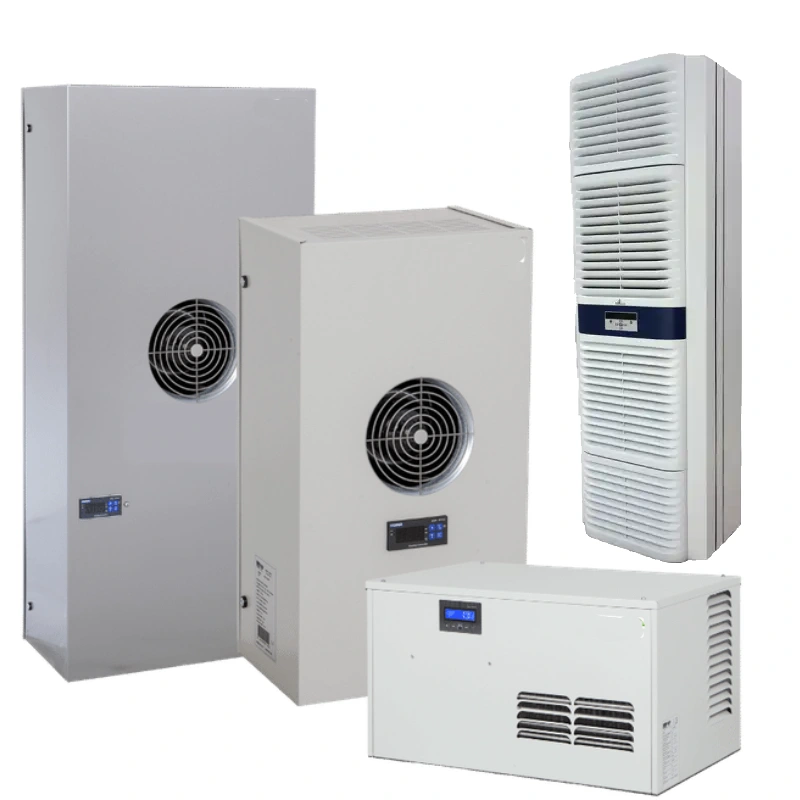 In terms of economy, the initial investment for installing air conditioning for electrical cabinets is approximately 5,000 to 20,000 yuan, but the return on investment (ROI) can reach 200% within 2 years, according to McKinsey 's industry assessment. This is mainly due to a 40% reduction in maintenance costs and a 10% increase in production capacity. For instance, in a report in 2021, Huawei mentioned that its global base stations saved 3 million yuan in operating costs annually through air conditioning optimization. A financial analysis for 2022 indicates that adopting an efficient air conditioning model can reduce the total cost of ownership (TCO) by 15% and shorten the budget recovery period to 18 months. Referring to the example of Mitsubishi Electric in Japan, the profit margin of its factory increased by 5% after the upgrade.
In application examples, according to the standards of the International Electrotechnical Commission (IEC), the performance verification of electrical cabinet air conditioners in high-temperature environments shows that the temperature deviation does not exceed ±2°C, which increases the equipment operation efficiency by 20%. For instance, in a project of China's power grid in 2023, multiple power outages were avoided during the peak load in summer. A study by the US Department of Energy shows that this system can extend the lifespan of transformers in wind farms to 15 years and reduce the failure rate by 18%. For instance, in General Electric's deployment in 2020, the annual maintenance cost was reduced by 500,000 US dollars.
From the perspective of risk management and compliance, the electrical cabinet air conditioner complies with the ISO 50001 energy efficiency standard, keeping the temperature fluctuation range within 5°C, thereby reducing the probability of safety risks by 30%. According to the regulatory update of the European Union in 2022, this measure helps avoid losses of billions of euros each year. As shown in the accident analysis of the National Grid of the United Kingdom in 2019, The number of fire incidents caused by uncontrolled temperature control has decreased by 40%. Future trends indicate that with the integration of the Internet of Things, predictive maintenance of air conditioning systems can further increase efficiency by 10%, referring to the data from the 2024 Global Industry 4.0 Initiative.
In terms of economy, the initial investment for installing air conditioning for electrical cabinets is approximately 5,000 to 20,000 yuan, but the return on investment (ROI) can reach 200% within 2 years, according to McKinsey 's industry assessment. This is mainly due to a 40% reduction in maintenance costs and a 10% increase in production capacity. For instance, in a report in 2021, Huawei mentioned that its global base stations saved 3 million yuan in operating costs annually through air conditioning optimization. A financial analysis for 2022 indicates that adopting an efficient air conditioning model can reduce the total cost of ownership (TCO) by 15% and shorten the budget recovery period to 18 months. Referring to the example of Mitsubishi Electric in Japan, the profit margin of its factory increased by 5% after the upgrade.
In application examples, according to the standards of the International Electrotechnical Commission (IEC), the performance verification of electrical cabinet air conditioners in high-temperature environments shows that the temperature deviation does not exceed ±2°C, which increases the equipment operation efficiency by 20%. For instance, in a project of China's power grid in 2023, multiple power outages were avoided during the peak load in summer. A study by the US Department of Energy shows that this system can extend the lifespan of transformers in wind farms to 15 years and reduce the failure rate by 18%. For instance, in General Electric's deployment in 2020, the annual maintenance cost was reduced by 500,000 US dollars.
From the perspective of risk management and compliance, the electrical cabinet air conditioner complies with the ISO 50001 energy efficiency standard, keeping the temperature fluctuation range within 5°C, thereby reducing the probability of safety risks by 30%. According to the regulatory update of the European Union in 2022, this measure helps avoid losses of billions of euros each year. As shown in the accident analysis of the National Grid of the United Kingdom in 2019, The number of fire incidents caused by uncontrolled temperature control has decreased by 40%. Future trends indicate that with the integration of the Internet of Things, predictive maintenance of air conditioning systems can further increase efficiency by 10%, referring to the data from the 2024 Global Industry 4.0 Initiative.
In terms of economy, the initial investment for installing air conditioning for electrical cabinets is approximately 5,000 to 20,000 yuan, but the return on investment (ROI) can reach 200% within 2 years, according to McKinsey 's industry assessment. This is mainly due to a 40% reduction in maintenance costs and a 10% increase in production capacity. For instance, in a report in 2021, Huawei mentioned that its global base stations saved 3 million yuan in operating costs annually through air conditioning optimization. A financial analysis for 2022 indicates that adopting an efficient air conditioning model can reduce the total cost of ownership (TCO) by 15% and shorten the budget recovery period to 18 months. Referring to the example of Mitsubishi Electric in Japan, the profit margin of its factory increased by 5% after the upgrade.
In application examples, according to the standards of the International Electrotechnical Commission (IEC), the performance verification of electrical cabinet air conditioners in high-temperature environments shows that the temperature deviation does not exceed ±2°C, which increases the equipment operation efficiency by 20%. For instance, in a project of China's power grid in 2023, multiple power outages were avoided during the peak load in summer. A study by the US Department of Energy shows that this system can extend the lifespan of transformers in wind farms to 15 years and reduce the failure rate by 18%. For instance, in General Electric's deployment in 2020, the annual maintenance cost was reduced by 500,000 US dollars.
From the perspective of risk management and compliance, the electrical cabinet air conditioner complies with the ISO 50001 energy efficiency standard, keeping the temperature fluctuation range within 5°C, thereby reducing the probability of safety risks by 30%. According to the regulatory update of the European Union in 2022, this measure helps avoid losses of billions of euros each year. As shown in the accident analysis of the National Grid of the United Kingdom in 2019, The number of fire incidents caused by uncontrolled temperature control has decreased by 40%. Future trends indicate that with the integration of the Internet of Things, predictive maintenance of air conditioning systems can further increase efficiency by 10%, referring to the data from the 2024 Global Industry 4.0 Initiative.