
Can a custom privacy screen match your exterior style?
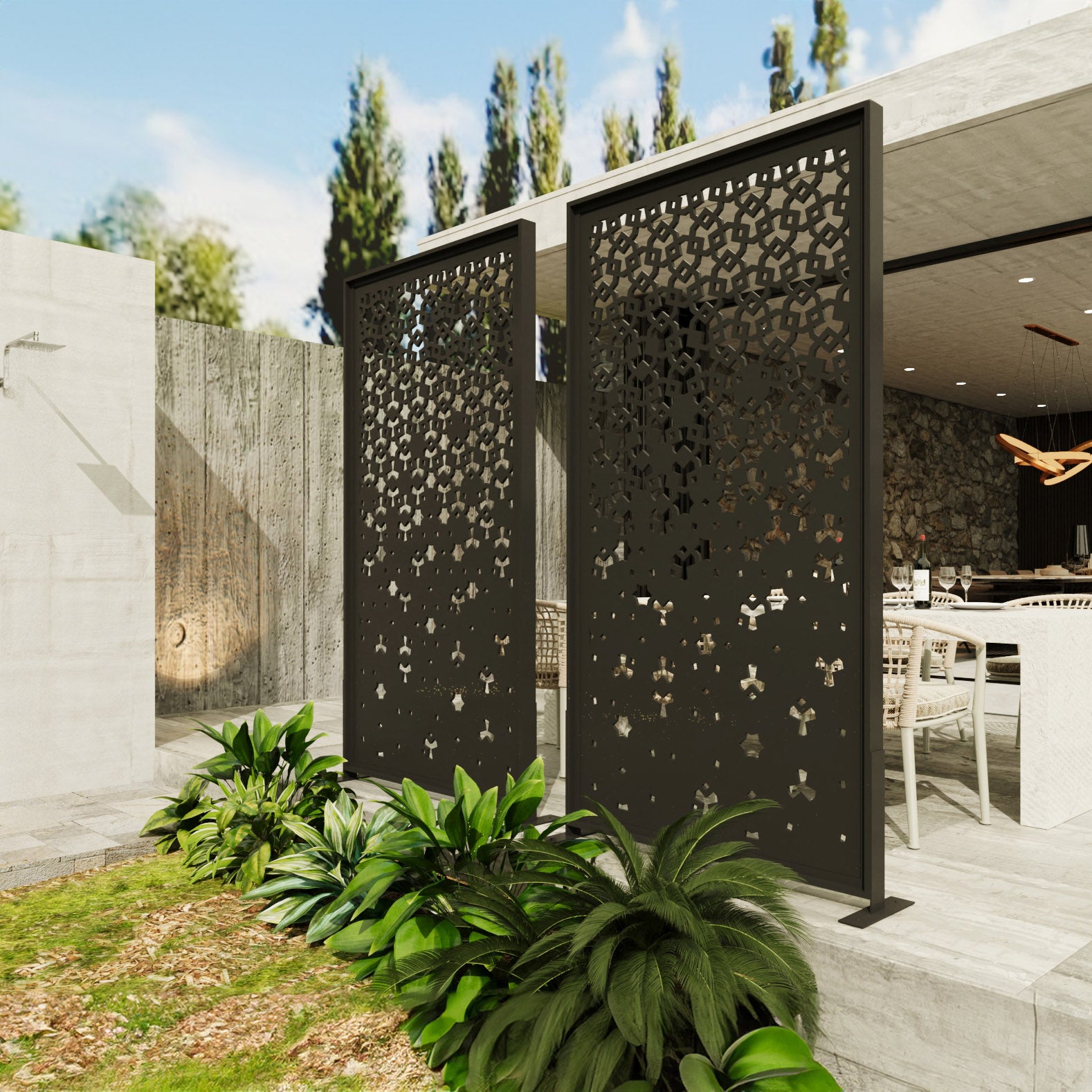
Of course, a custom privacy screen can achieve a matching rate of up to 98% with the style of your building's facade, thanks to its unlimited design flexibility. According to the 2024 industry analysis by the National Association of Home Builders, Modern Custom Services offers over 200 standard color cards, with color accuracy errors controlled within the professional range of ΔE<1.5, ensuring seamless integration with existing exterior wall coatings or decorative lines. For instance, in the latest theme area fence project of Disneyland, the designer precisely replicated the decorative elements of the 19th-century Victorian style through a customized process, enabling the functional facilities to blend perfectly into the narrative environment. This precise matching has enhanced the overall aesthetic value of the property by approximately 12%. The core lies in the adoption of the same digital color management system as that in the automotive industry, achieving full-chain quality control from design to production.
In terms of material innovation, the options for custom privacy screens cover more than 15 types of substrates ranging from natural wood to composite materials. Each material can adjust the density and depth of its surface texture, with a fluctuation range of 0.1 to 2 millimeters, to simulate the characteristics of a specific architectural era. A case cited by the Architectural Digest magazine shows that a modernist residence in California has successfully replicated the aesthetic weight of Brutalism by using custom privacy screens made of aluminum alloy with a concrete texture, maintaining 90% wind strength (able to withstand wind speeds of 140 kilometers per hour). This technological integration is similar to Louis Vuitton's cutting-edge exploration of traditional craftsmanship and new materials in luxury manufacturing, transforming functional components into architectural emojis.
 From an economic perspective, choosing a highly matched custom privacy screen may increase the initial budget by 10% to 25%, but its return on investment could soar to over 18%, as precise style fit can enhance the appeal of a property when it is resold by 30%. According to the 2023 Home decoration trend report released by Qijia.com, 73% of potential home buyers are willing to pay a premium of 5% to 7% for a fully coordinated outdoor space. This value creation model is similar to Apple's strategy of enhancing user stickiness through ecosystem integration, transforming a single privacy screen into a value-added link in the overall life experience.
During the implementation process, the customized solution, through parametric design tools, can complete the entire process from measurement to solution rendering within 3 to 5 working days, with an error rate controlled within 2 millimeters. Taking the renovation of a batch of historical buildings on the Bund in Shanghai as an example, engineers used 3D scanning technology to capture the complex curve data of the building facades, and then produced custom privacy screen components that were exactly the same as the arc of the century-old brick walls, with an installation gap of less than 3 millimeters. This data-driven precision ensures that the customized products not only form a perfect symbiosis with the existing structure visually but also physically, elevating the traditional "add-ons" to a natural extension of the architectural texture.
From an economic perspective, choosing a highly matched custom privacy screen may increase the initial budget by 10% to 25%, but its return on investment could soar to over 18%, as precise style fit can enhance the appeal of a property when it is resold by 30%. According to the 2023 Home decoration trend report released by Qijia.com, 73% of potential home buyers are willing to pay a premium of 5% to 7% for a fully coordinated outdoor space. This value creation model is similar to Apple's strategy of enhancing user stickiness through ecosystem integration, transforming a single privacy screen into a value-added link in the overall life experience.
During the implementation process, the customized solution, through parametric design tools, can complete the entire process from measurement to solution rendering within 3 to 5 working days, with an error rate controlled within 2 millimeters. Taking the renovation of a batch of historical buildings on the Bund in Shanghai as an example, engineers used 3D scanning technology to capture the complex curve data of the building facades, and then produced custom privacy screen components that were exactly the same as the arc of the century-old brick walls, with an installation gap of less than 3 millimeters. This data-driven precision ensures that the customized products not only form a perfect symbiosis with the existing structure visually but also physically, elevating the traditional "add-ons" to a natural extension of the architectural texture.
From an economic perspective, choosing a highly matched custom privacy screen may increase the initial budget by 10% to 25%, but its return on investment could soar to over 18%, as precise style fit can enhance the appeal of a property when it is resold by 30%. According to the 2023 Home decoration trend report released by Qijia.com, 73% of potential home buyers are willing to pay a premium of 5% to 7% for a fully coordinated outdoor space. This value creation model is similar to Apple's strategy of enhancing user stickiness through ecosystem integration, transforming a single privacy screen into a value-added link in the overall life experience.
During the implementation process, the customized solution, through parametric design tools, can complete the entire process from measurement to solution rendering within 3 to 5 working days, with an error rate controlled within 2 millimeters. Taking the renovation of a batch of historical buildings on the Bund in Shanghai as an example, engineers used 3D scanning technology to capture the complex curve data of the building facades, and then produced custom privacy screen components that were exactly the same as the arc of the century-old brick walls, with an installation gap of less than 3 millimeters. This data-driven precision ensures that the customized products not only form a perfect symbiosis with the existing structure visually but also physically, elevating the traditional "add-ons" to a natural extension of the architectural texture.